
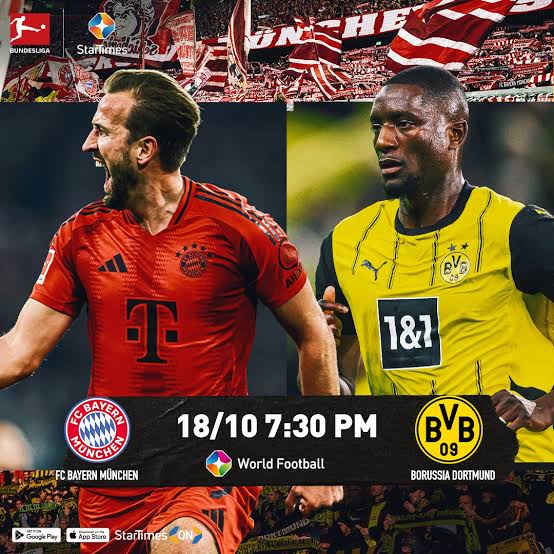
Few rivalries in world football capture the imagination quite like Bayern Munich vs Borussia Dortmund. What began as a fierce domestic competition in the Bundesliga has transcended borders to become one of Europe’s most thrilling spectacles, particularly when the two German powerhouses collide in the UEFA Champions League. Their head-to-head history in Europe is as electrifying as it is historic, filled with drama, intensity, and footballing brilliance.
The rivalry reached its European peak during the 2012/13 UEFA Champions League season, when the two sides met in an all-German final at Wembley Stadium. It was a night that marked a monumental chapter in football history — the first time two Bundesliga teams faced each other in the Champions League final. Bayern, led by Jupp Heynckes, and Dortmund, inspired by Jürgen Klopp’s dynamic pressing football, produced one of the most thrilling finals of the modern era.
The match was a tactical chess game infused with emotion. Dortmund’s aggressive pressing and pace from Marco Reus and Jakub Błaszczykowski tested Bayern’s backline, while Arjen Robben and Franck Ribéry orchestrated attacks from the flanks. After 89 minutes of relentless action, it was Robben who sealed Bayern’s 2–1 victory with a late winner, handing the Bavarians their long-awaited fifth European crown and leaving Dortmund heartbroken.
Since that historic night, Bayern and Dortmund have crossed paths again in Europe’s elite competition, and every encounter has carried echoes of that Wembley final. Bayern’s relentless consistency and European pedigree have often given them the edge, yet Dortmund’s youthful energy and attacking fearlessness ensure that their meetings never lack intensity or unpredictability.
Beyond the statistics, the head-to-head history between these two clubs symbolizes the evolution of German football — from local derbies to global showcases of tactical excellence. Managers like Pep Guardiola, Thomas Tuchel, and Edin Terzić have added new layers to this rivalry, transforming it into a stage for innovation, resilience, and ambition.
In total, Bayern Munich hold the advantage in their Champions League meetings, but Borussia Dortmund have repeatedly proven that they can rise to the occasion against Europe’s elite. Each battle between these giants is more than a match; it’s a story of pride, legacy, and footballing identity that continues to define German football on the European stage.
As both clubs march on in the 2025/26 UEFA Champions League season, the world waits once again to see if destiny will pit them together — and reignite one of football’s most captivating rivalries under the bright lights of Europe.
